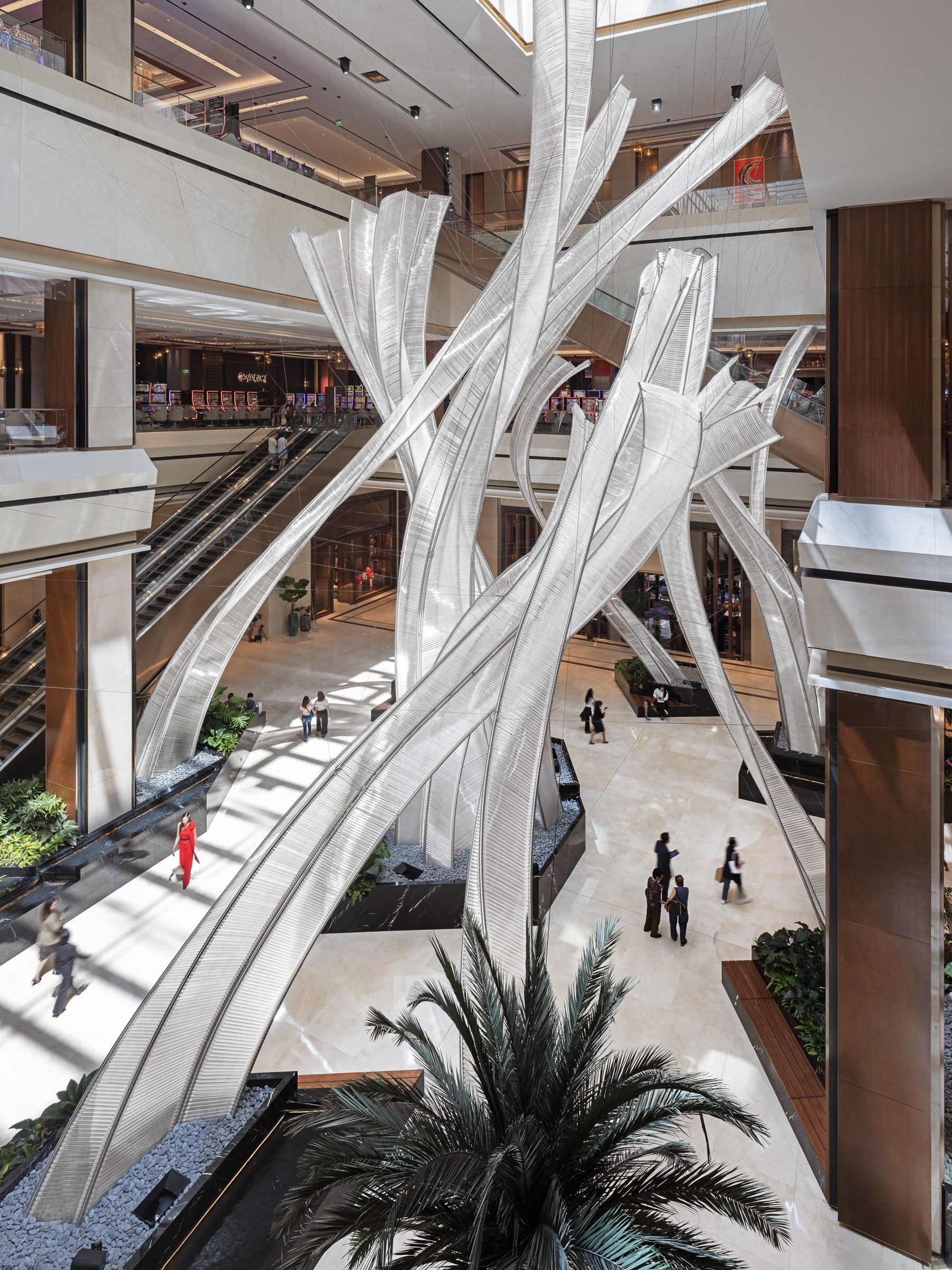

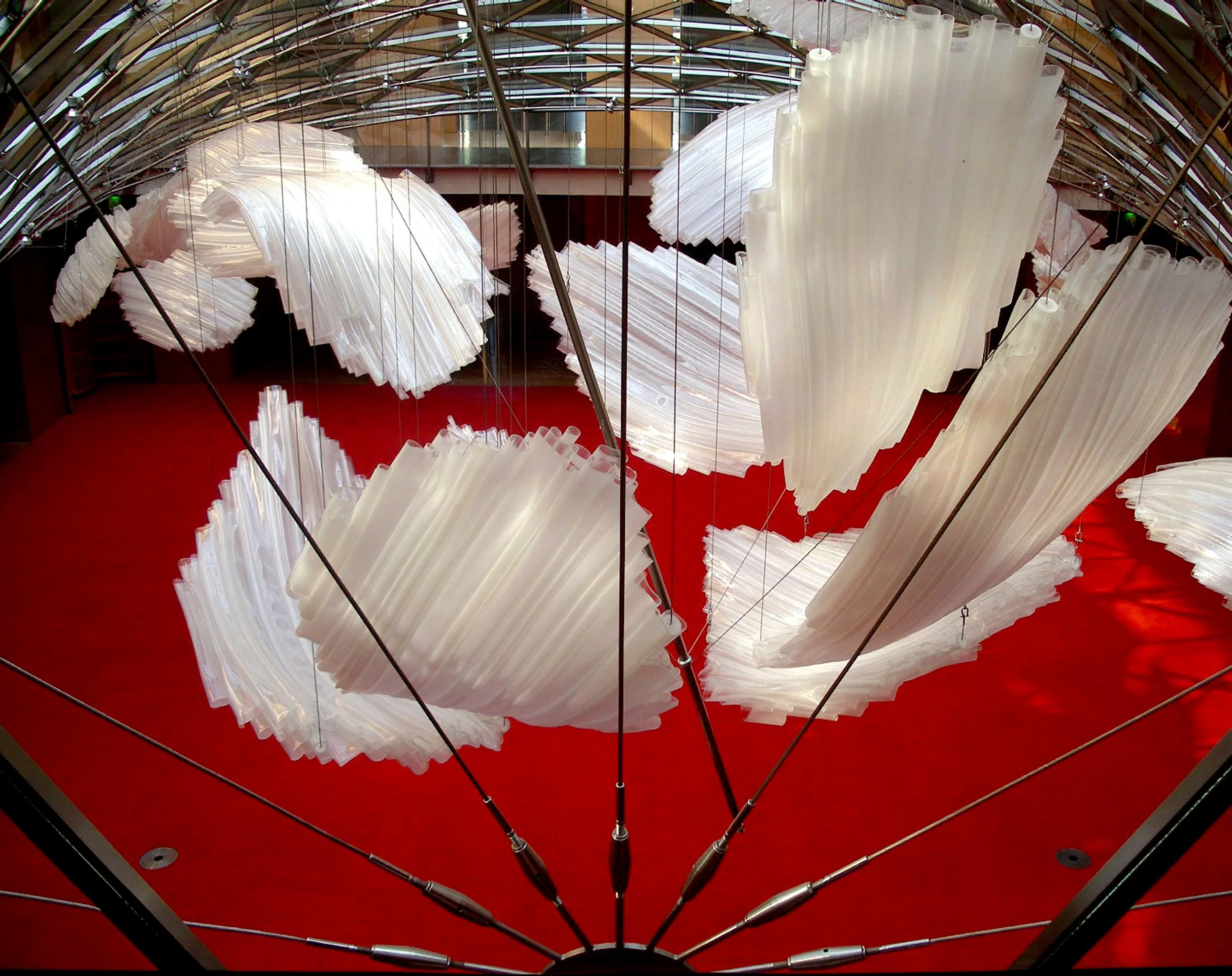
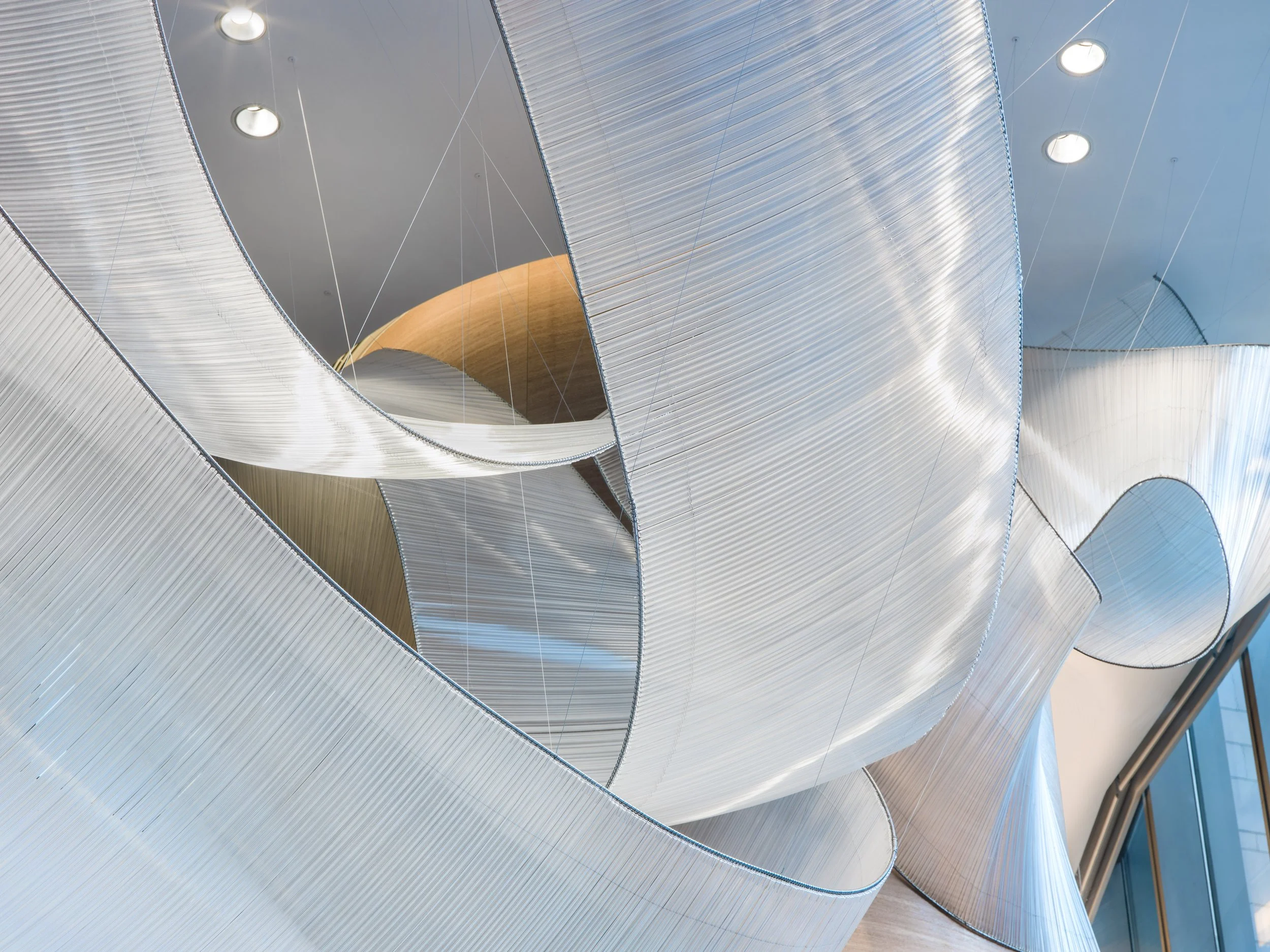
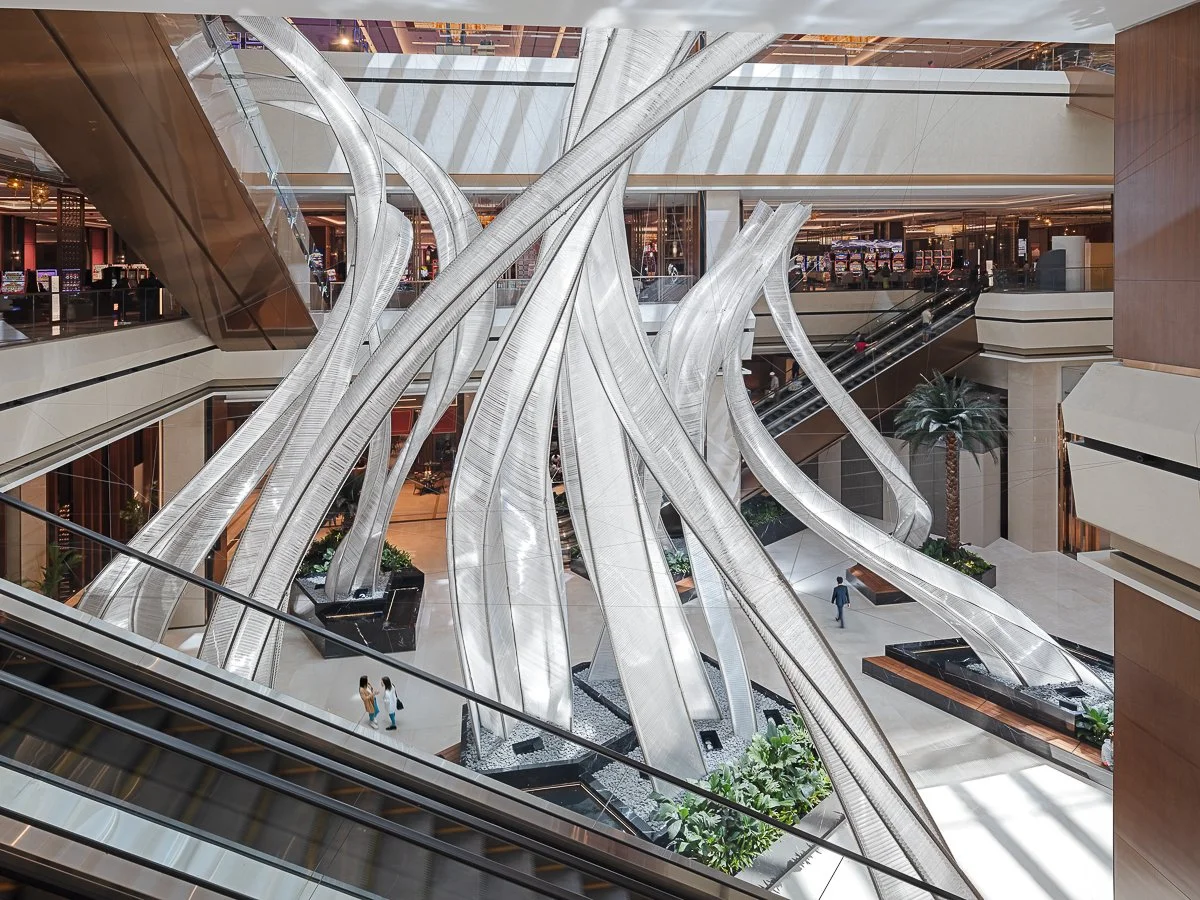
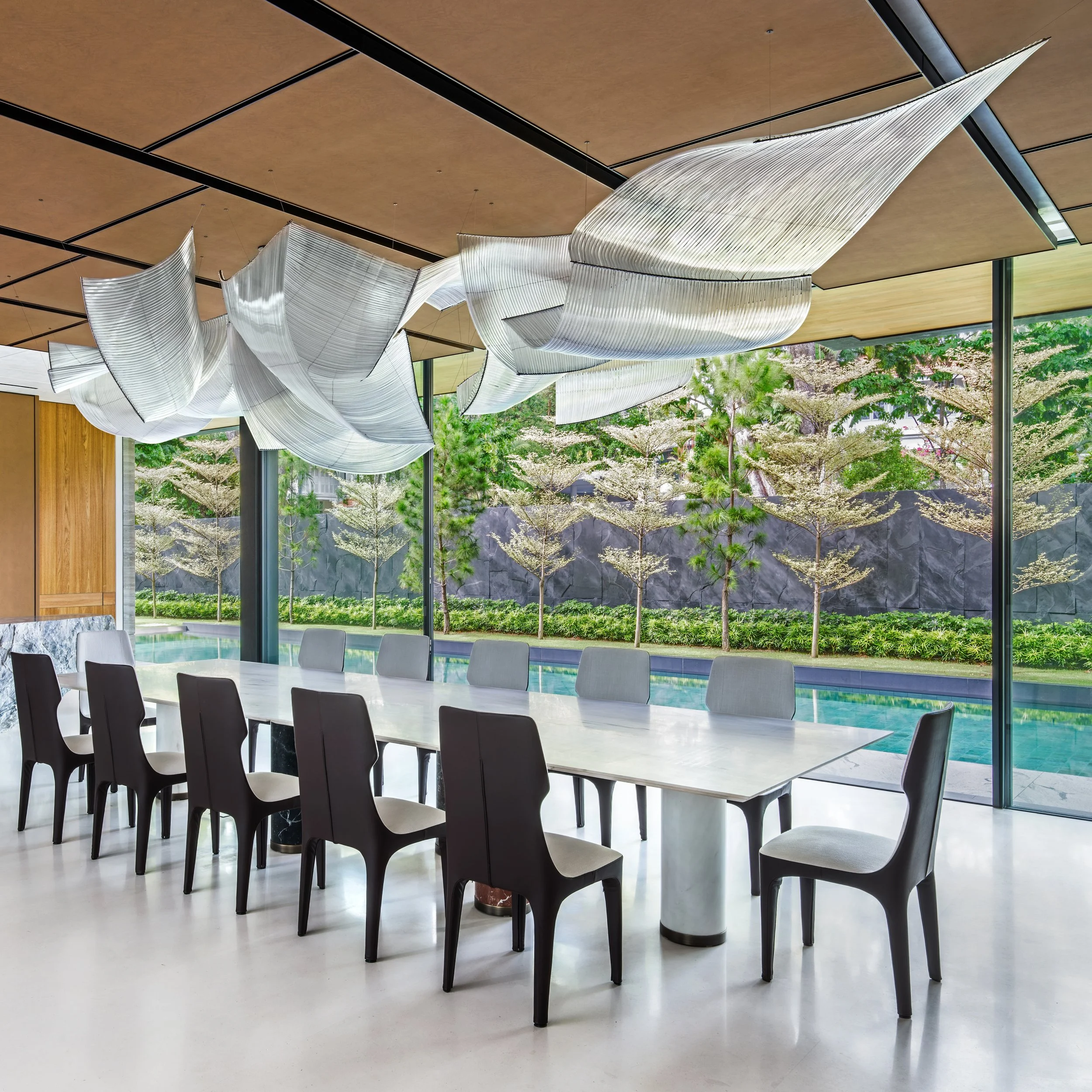


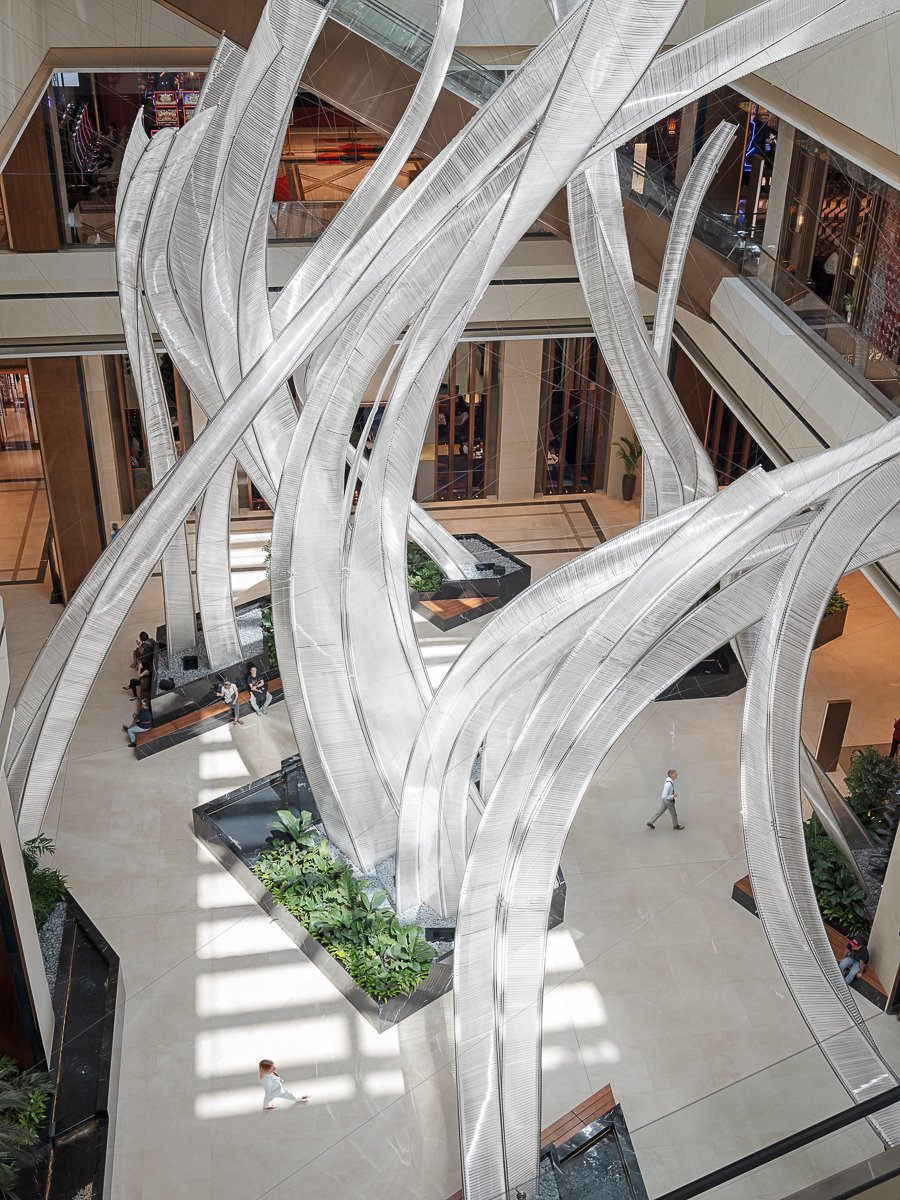
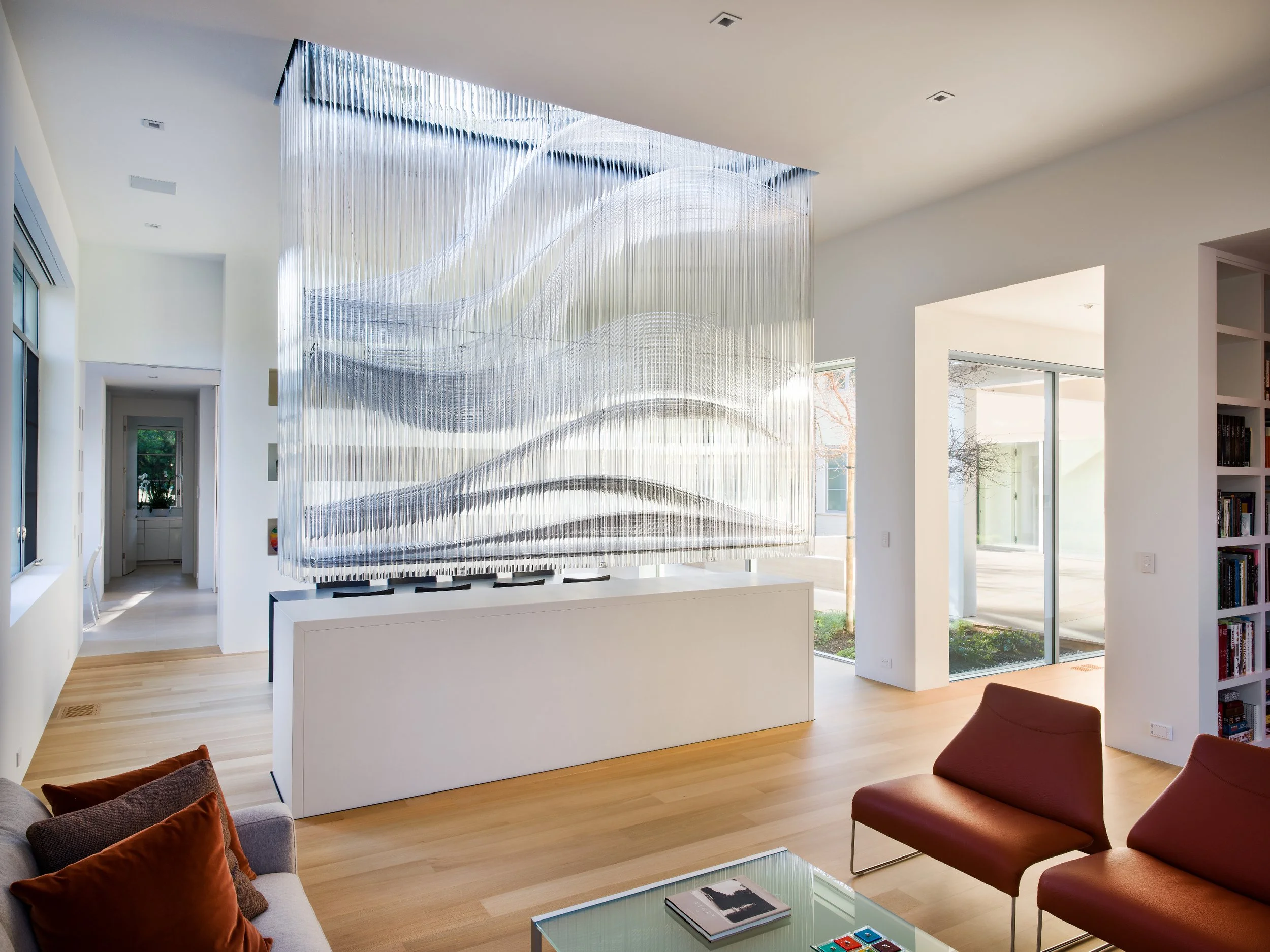
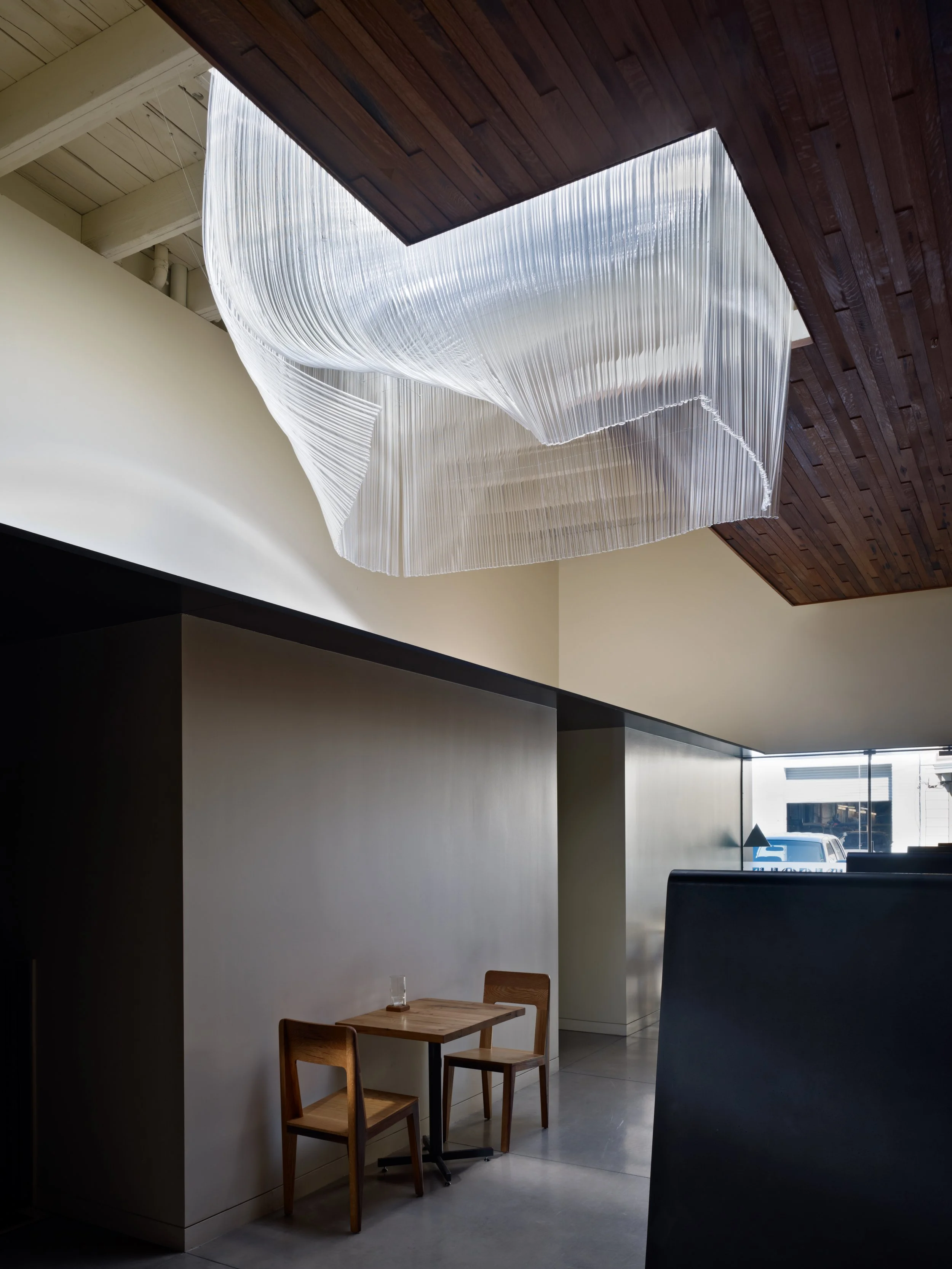
I build sculptures that “talk” to buildings; that bring a sense of character or focus to a space by developing a conversation with its key elements, scales, and rhythms. Nikolas Weinstein
Glass Sculptures for
Architectural Spaces
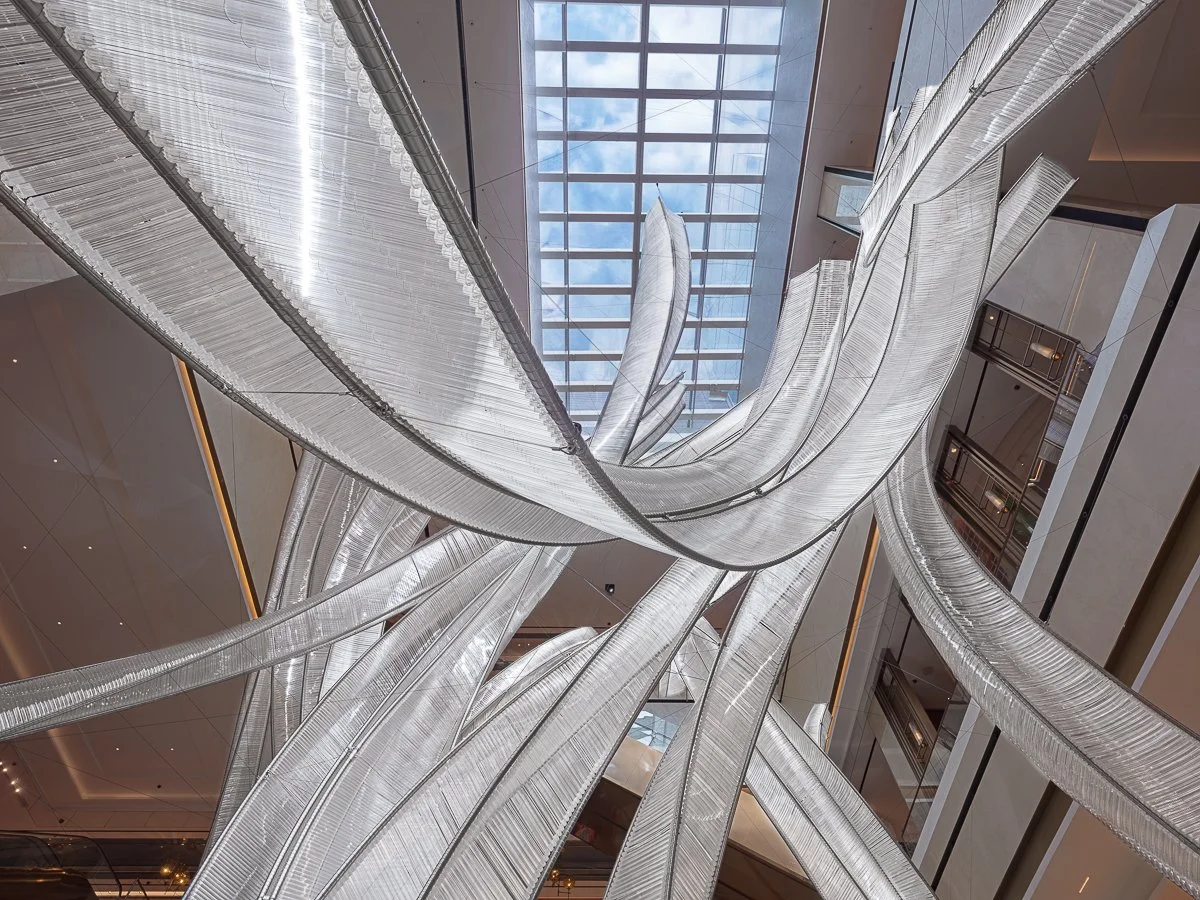
Nikolas Weinstein's sculptures are "echoes" of the built environment—installations that derive their scale and contours from the building itself but are rendered in more ethereal and organic forms. Over his 25-year career, Weinstein has collaborated with Frank Gehry, Kengo Kuma, Foster + Partners, and other prominent designers on installations across Europe, North America, and Asia. The installations range in scale from the world's largest glass sculpture on record, towering eight stories, to residential artworks for private clients. He is known for pushing the boundaries of what's possible using glass as a medium. All work is done in-house by the Studio team. MORE
Weaving Glass
I became interested in glass because of the way it stretches and moves when you're working with it hot. I've been trying to take that same language of form—that blown glass experience—and translate it to architectural scale. It's been a long-standing exploration of glass as a fabric or flexible material. Most people are surprised because they think of glass as brittle, something that breaks. I see it as something that stretches and moves—that is forgiving and expressive. MORE
Light as Material
Glass conducts light more efficiently than any other material—that's why it's fundamentally defined by it. Colorless glass has all the potential—like a chameleon, it changes and throws back the colors in the room around it. The sculptures change constantly with where you stand, the time of day, and the colors of those standing beneath it. Leaving it pure allows them to color-shift rather than remain fixed. MORE
Shaped by Nature
I'm less interested in how nature looks than in how it's built and how it moves—the geometry and strength of honeycombs or the recurring patterns found in arteries, rivers, and tree branches. The process of developing sculpture is like looking for the DNA of shape, identifying fundamental structures that organize how things look, work, and move, and then exploring the range of possible answers in glass at architectural scale. MORE
Making the
Tools We Need
I don't start by imagining things I already know how to do. If we don't have the right tool, we make it, because I believe design is fundamentally tied to engineering and fabrication. Working through things we haven't figured out yet means we end up in new places. As each sculpture finishes, I can just begin to glimpse what I don't know how to do, and that's what drives the work forward. MORE
Plugging in
I imagine these installations in "conversation" with the building, both sympathetic to its geometries but also acting as its counterpoint. I start by studying the space, looking for its most characteristic attributes and imagining a conversation with that building—sometimes pushing against it, sometimes leaning into it. You end up with sculptures that wouldn't make sense if separated from their spaces. They talk to a client's building—not someone else's, not a type, but theirs. MORE
The Latest